Belton Handwritten Font for Crafters & Small Shop Owners
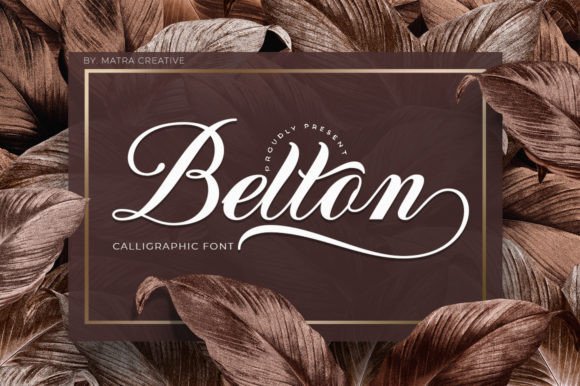
If you've ever spent hours tweaking letter spacing on a wedding invitation only to realize the script looks stiff—or struggled to find a handwritten font that cuts cleanly on your Cricut while still feeling luxurious—you’ll appreciate Belton. It’s not just another script font. Belton is a thoughtfully crafted handwritten typeface with natural flow, intentional contrast, and elegant swashes that elevate handmade products without sacrificing usability.
As someone who designs printable wall art, creates custom candle labels, and sells SVG bundles for seasonal signs, I test fonts by how they behave in real production—not just how they look in a preview window. Belton stands out because its swashes are generous but controlled: they add movement and sophistication without tangling or overlapping when resized for 1-inch stickers or laser-cut wood tags. The baseline rhythm feels organic, like ink drawn with confidence—not shaky, not overly uniform, but authentically human.
For physical product creators, Belton shines where first impressions matter most. Think of a boutique soap label: a short brand name in Belton, paired with a clean sans serif for ingredients and weight, instantly signals craftsmanship and care. Or imagine a farmhouse-style welcome sign—Belton’s swashes anchor the word “Welcome” at the top, while the rest of the message uses a sturdy serif for legibility from across the room. Even on small items like gift tags or tea towel embroidery patterns, Belton remains readable at 14–16pt when printed, especially when used for names, titles, or short phrases.
Wedding stationery designers will love how Belton balances romance and restraint. Unlike ultra-thin scripts that disappear on matte paper or bleed on inkjet printers, Belton’s stroke weight holds up beautifully on letterpress, foil-stamped cards, and digital prints. Use the alternate characters and ligatures to customize “Mr. & Mrs.” or monogram initials—subtle touches that make clients feel their stationery was truly bespoke. And yes—it works for Save-the-Dates, menus, place cards, and even chalkboard-style signage (just convert to outlines before importing into design software).
Printable creators and template sellers benefit from Belton’s versatility in digital formats too. When designing planner stickers, use the swash capitals for section headers (“Goals”, “Gratitude”, “Weekly Review”) and switch to standard lowercase for checklist items. For editable Canva templates or layered PSD files, Belton’s OpenType features—including contextual alternates—give buyers flexibility without requiring advanced typography knowledge. Just highlight text and choose from the glyph panel. No extra plugins needed.
SVG and craft-cutting users take note: Belton imports cleanly into Silhouette Studio and Cricut Design Space. Its curves are smooth enough for precise blade paths, and the swashes don’t create unintended cut lines when expanded. I’ve used it successfully for vinyl decals on mugs, iron-on transfers for tote bags, and engraved acrylic keychains—all with crisp edges and no jagged joins. Pro tip: always convert to outlines before sending to your cutting machine, and avoid scaling below 0.25 inches for intricate swashes.
Pairing Belton thoughtfully makes all the difference. As a Script Amp font, it thrives alongside minimalist sans serifs like Montserrat, Poppins, or Lato—ideal for product labels, social media graphics, or Etsy listing banners where clarity meets charm. For vintage-inspired packaging or holiday printables, try pairing it with a warm serif like Playfair Display or Cormorant Garamond. Avoid stacking multiple decorative fonts; let Belton be the star, supported by something quiet and functional.
Belton includes OTF and TTF file formats, full multilingual support (including extended Latin characters), and built-in swash alternates accessible via standard font menus or glyph panels. You’ll find uppercase and lowercase letters, numerals, punctuation, and thoughtful ligatures for common pairs like “fi”, “fl”, and “ct”. There’s no separate “swash-only” file to manage—everything lives in one well-organized font family. That simplicity saves time when prepping files for commercial use or client handoff.
Licensing matters—especially if you’re selling physical goods, digital downloads, or editable templates. Belton is a commercial font, meaning you can use it freely in products you sell: printed invitations, sticker sheets, SVG cut files, branded merchandise, and even client branding projects. Just ensure your license covers the scope of your use—most Script Amp fonts include broad commercial rights, but always verify before bundling into subscription-based design assets or reselling as part of a font pack.
In my shop, Belton has become my go-to for anything needing warmth and intention: holiday ornament tags, baby shower banners, boutique price tags, and even custom bakery box stamps. It doesn’t shout—but it lingers. Customers notice the care in the details, and that subtle distinction builds trust and repeat business. When your font helps tell your story before a single word is read, you’re not just choosing type—you’re shaping perception.
Whether you're sketching ideas on paper or building a scalable digital product line, Belton delivers both aesthetic appeal and practical reliability. It’s the kind of font that grows with your shop: useful today on a hand-lettered greeting card, and just as effective six months from now on a best-selling printable planner bundle. That rare blend—beauty that works, and work that inspires—is why Belton stays open on my design desktop more days than not.